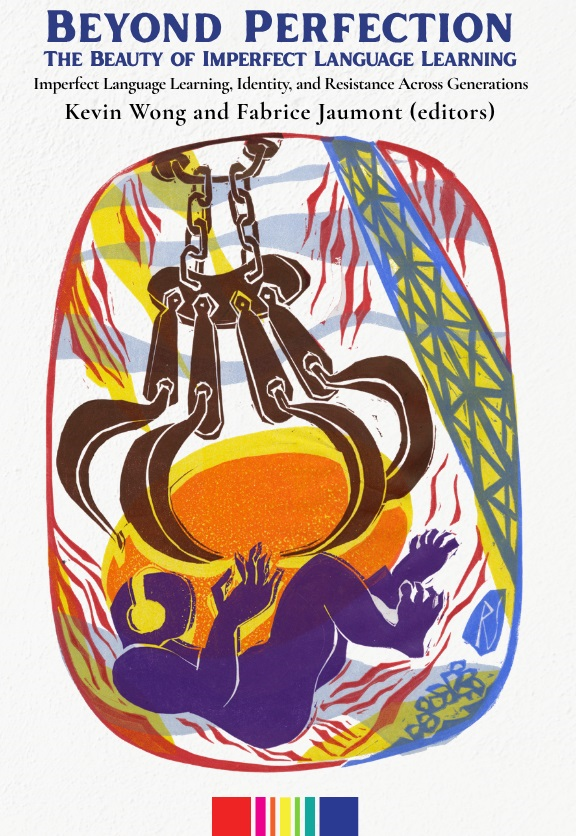
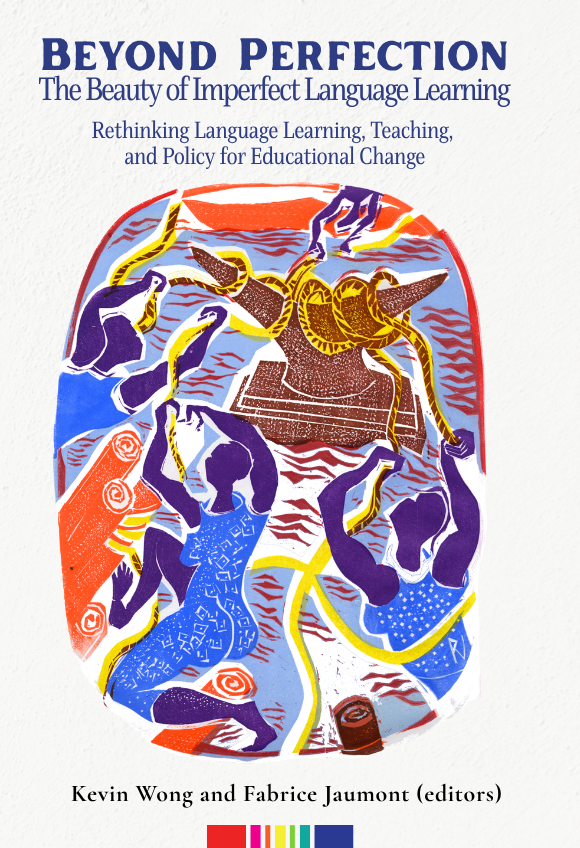
Historically and within contemporary society, the so-called mastery of language has been defined by the measures of accent, grammar, proficiency and a multitude of other standards. This previously accepted structure feeds into feelings of inadequacy and poses questions of belonging for the multilingual individual if this criteria is not perfectly met. However, this limitation is being actively challenged by the project, Beyond Perfection: The Beauty of Imperfect Language Learning. Throughout two volumes, editors Kevin Wong and Fabrice Jaumont tell a story that rewrites the measure of linguistic value to account for the complexity of those living multilingual lives. Through an interview with Dr. Wong, we are able to dive deeper into the process and purpose of these two volumes addressing the standards of linguistic competence.
Inspiration
To begin, it is important to understand the personal connection that inspired and influenced this project. As a multilingual individual himself, Dr. Wong has a profound connection with language, stating that “language carries family, memory, culture, and belonging for me.” Although, his experience with language also carries questions of value and adequacy that are created by external expectations. Also, largely involved in the education system from elementary school to university as teacher and professor, Dr. Wong has a unique perspective and direct interaction with language learning. At Pepperdine University, he is the Associate Professor of Education and Chair of the Masters in Teaching Language to Speakers of Other Languages program (TESOL) within the Graduate School of Education and Psychology. As a result of his personal and professional background, he was able to recognize the common struggles within the multilingual community, inspiring the research question that fueled the mission of Beyond Perfection.
As an educator and researcher, I have become increasingly interested in how people come to understand the value of their own linguistic lives and how schools and other institutions participate in shaping that understanding. Beyond Perfection grew from that concern. I wanted to create space for multilingual experiences that are complicated, evolving, emotionally charged, and deeply meaningful.
Imagination to Publication
What began as a conversation about imperfect language learning developed into a major undertaking including 65 contributors all bringing their own research and personal experiences to the project. After a year and a half, two volumes were published with the collaboration of CALEC - TBR Books, tackling the standards of language learning through empirical and conceptual studies. The first volume traces the journey of imperfect language learning across generations, borders, and within the self, which is then taken into the classroom in volume two. Thus encompassing the entire process from what it means to accept a life of imperfect language learning to creating institutions that will sustain and enforce that ideal. However, such a massive project comes with its own challenges. It was the mission of Dr. Wong and Dr. Jaumont to reconcile the distinct voices of the authors while creating an overarching intellectual narrative. Further, the nature of this work added another layer of complexity to this task of representation. Dr. Wong acknowledges that,
Many contributors were sharing experiences that were personally significant, including stories of migration, family language transmission, linguistic shame, identity, parenting, exclusion, reclamation, and belonging. Editing that work carries a particular responsibility because you are working with both ideas and people’s lives.
Faced with this responsibility, Dr. Wong was dedicated to “maintaining the humanity of this project,” making the message of these volumes even more powerful. In order to maintain the balance between individual authors and overall purpose, Dr. Wong noted that he and Dr. Jaumont carefully crafted introductions and conclusions that “allowed [them] to step back from individual chapters and ask what this collective body of work was teaching [them] about multilingualism, language ideology, power, and educational institutions.”
Takeaways
So, from the 65 contributors, over a year of work, and countless personal experiences that went into this massive project, what should be taken away?
I hope readers come away understanding that the ways multilingual people use language have value on their own terms. Multilingual lives develop through relationships, histories, migration, education, family, community, and experience. They rarely follow a single trajectory, and they do not need to approximate an idealized model of equal or native-like proficiency in order to be meaningful.
In order to reflect the unique journey that is taken by each multilingual individual, the measure of value must be re-evaluated. The “deeper issue” that emerges is “the question of who gets to define linguistic value.” As of now,
Standards of fluency, correctness, and legitimacy are produced socially and institutionally. They affect how people see themselves and how schools, workplaces, and communities recognize them. One of the central ideas of the collection is that multilingual people can develop a different relationship to those judgments. They can recognize the systems that produced them, reclaim the value of their own practices, and carry that understanding into how they live and act in the world.
With that being said, it is clear that these restrictive conceptions are deeply rooted in our society. However, they do not need to continue to define how multilingual individuals are perceived or how they perceive their own capabilities. In changing this perspective, an individual’s understanding of their own complex relationship to language is revolutionized, whether that be in terms of belonging, self-value, adequacy or beyond.
Vocabulary
Finally, to fully understand the research and the purpose of Beyond Perfection, there is certain vocabulary that must be defined. The following terms were selected and defined by Dr. Wong as some of the more crucial and complex concepts:
Translingual Imperfection is an emancipatory theoretical orientation that reframes linguistic imperfection as a site of consciousness, agency, and resistance. It focuses on how multilingual people understand and transform their relationship to systems that have taught them to view parts of their linguistic repertoires as deficient.
The framework has three interconnected principles:
Systemic recognition is the process of recognizing that judgments about linguistic inadequacy come from socially constructed standards of language and from relations of power. It involves learning to see the system that produced the judgment.
Reclamation is the process of revaluing one’s multilingual practices as legitimate, generative, and meaningful. It involves developing the authority to understand one’s own linguistic life in terms that reflect one’s histories, purposes, relationships, and experiences.
Translingual praxis is what happens when that changed understanding becomes action. It appears in how people speak, parent, teach, write, research, organize, and create educational spaces.
An idea that runs beneath all three is the monolingual standard, the assumption that language competence should be evaluated according to bounded, stable, and often idealized models of language. Many of the experiences in the collection show what happens when multilingual lives encounter those expectations.
Conclusion
The two volumes of Beyond Perfection: The Beauty of Imperfect Language Learning reveal the shared struggles of the multilingual community which are rooted in measuring themselves against the societal perceptions of correctness and fluency. By first appreciating the beauty of language itself, outside of the norms of perfection, individuals reclaim their own linguistic value which accounts for their own journey with language across borders, generations, relationships, and experiences. Then, in order to institutionalize this alternative view of language, the question of imperfect language learning must be brought into the classroom where this concept is applied and taught. Seeing as language is an inherent part of our everyday lives, crucial to our internal identity and external expression, it should not be the source of shame, exclusion, or diminished self-worth. Rather, we can recognize it as an independent beauty and a reflection of a unique identity.
That is why the title Beyond Perfection matters so much to me. The invitation is to see multilingual life with greater complexity, generosity, and attention to the conditions that shape how linguistic value gets assigned.
A project re-evaluating the structures that assign linguistic value through touching personal accounts and empirical studies, Beyond Perfection: The Beauty of Imperfect Language Learning is available in the CALEC bookstore.
Volume One is accessible at: https://calec.org/product/beyond-perfection-the-beauty-of-imperfect-language-learning-volume-1/ and Volume Two is accessible at: https://calec.org/product/beyond-perfection-the-beauty-of-imperfect-language-learning-volume-2/?attribute_pa_format=paperback
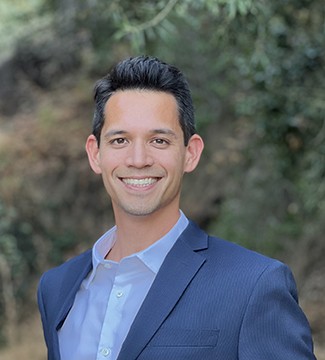
Kevin Wong is an Associate Professor of Education and Chair of the MA in TESOL program at Pepperdine University in the Graduate School of Education and Psychology. He is also Associate Editor of International Journal of Bilingual Education and Bilingualism, Co-Editor of The CATESOL Journal and Editor of The Teacher Advocate. Kevin received his Ph.D. in Teaching and Learning, specializing in literacy and multilingual education. His research and teaching are devoted to working with teachers to provide multilingual students with linguistically and culturally sustaining, equitable, and humanizing learning environments.
Sources:
Beyond Perfection: The Beauty of Imperfect Language Learning
Interview with Dr. Kevin Wong