Learning French in New York City extends far beyond the classroom. While grammar exercises and vocabulary quizzes lay the foundation, the city itself offers countless opportunities to encounter the language in everyday life. From conversations with West African immigrants in the Bronx to French tourists, Québécois visitors, cultural institutions, cafés, and international events, New York has become an unexpected place to experience the diversity of the French-speaking world.
The French language has always fascinated me. As a French major myself based in New York City, I am especially interested in how the French language continues to thrive in different Francophone spaces in the city. Through these interviews I hope to learn how students and francophone people continue to create and live in French spaces in NYC, ultimately helping to cultivate “La Francophonie,” the global community united by the French language and shaped by diverse cultures, histories, and voices.
To better understand what it is like to study French in one of the world’s most multilingual cities, I spoke with a Fordham University student, Hayley, whose journey with the language began with a simple curiosity and has grown into a passion. Hayley is originally from California, she is a third-year undergraduate student at Fordham studying international relations and French studies. Over seven years of studying French, she has navigated the excitement of speaking with native speakers, the challenges of overcoming perfectionism, and the rewarding moments that come from stepping outside their comfort zone. Her experiences reveal that learning French in New York is not just about mastering a language, it’s about discovering new cultures, building meaningful connections, and finding confidence through real-world conversations.
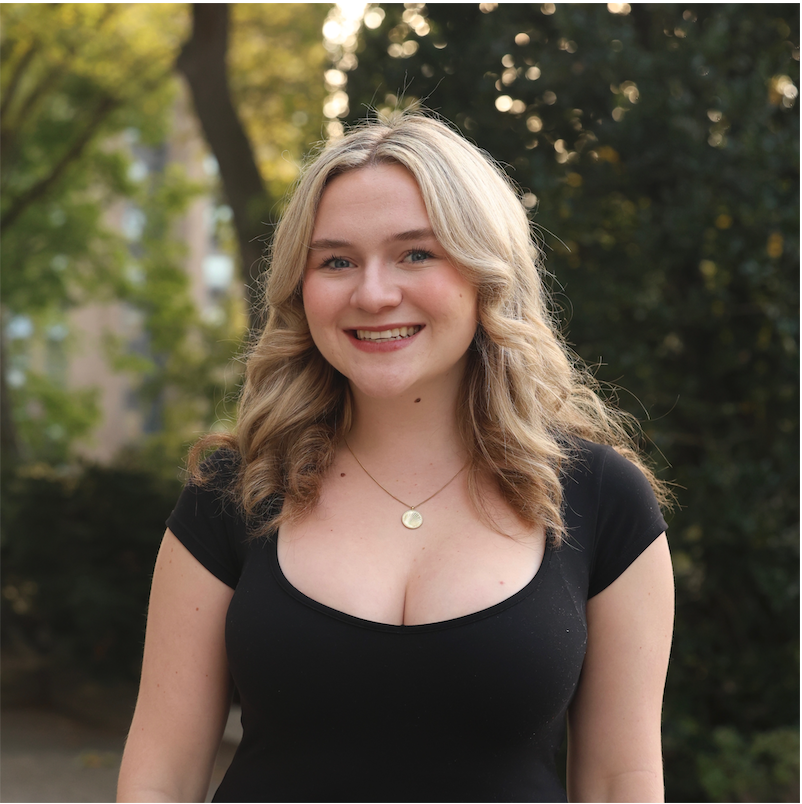
In the interview below, she reflects on her motivations for learning French, the role New York City has played in their language journey, and why embracing mistakes may be one of the most valuable lessons of all.
Before discussing her experiences learning French, I first wanted to understand what initially inspired her to begin studying the language and how long she has been on that journey.
Interviewer: What first made you decide to learn French, and how long have you been learning French?
Hayley: I first decided to learn French because I thought it would be fun since I really like French pastries. I have been learning French for seven years.
After learning what first sparked her interest in French, I wanted to better understand why she chose French over other languages that may have been more practical.
Interviewer: Why French instead of another language?
Hayley: I chose French because, although Spanish was more useful in my hometown, I was always interested in Paris, French being known as the language of love, and how frequently it appears in popular culture.
As our conversation continued, I was interested in seeing whether her motivations had changed as she became more experienced with the language.
Interviewer: Have your reasons for learning French changed over time?
Hayley: Yes. Now I study French because I am passionate about it, and I want to become fluent. Once I realized I was skilled at French, I decided it was something I wanted to pursue in college.
Since New York City is home to many French-speaking communities, I next asked how living there has influenced her language-learning experience.
Interviewer: In what ways has the diversity of New York influenced your experience learning French?
Hayley: By studying in New York, I have gained more access to French speakers and culture, giving me more reasons to pursue it in my studies. NYC also has a broad range of French speakers, from France to Quebec to West Africa. Especially studying in the Bronx, there are many immigrants from West Africa, which motivates me to communicate with them and learn from them.
Building on the influence of New York, I wanted to know whether those opportunities had translated into real conversations with native French speakers.
Interviewer: Have you had opportunities to practice French with native speakers, especially in NYC? If so, in what situations?
Hayley: Yes. I have spoken to a plethora of people in NYC using my French skills, ranging from Uber drivers and tourists to food delivery workers and people on the street. One time, I served as a translator on a flight to New York because there was a man who only spoke French, so the flight attendant enlisted me to help them communicate.
Although New York offers many opportunities to speak French, I was curious whether Hayley actively takes advantage of those opportunities in her daily life.
Interviewer: Are there places or events in New York where you use French?
Hayley: Yes and no. There are definitely a lot of opportunities for me to use French around NYC, but sometimes I choose not to because I feel nervous about making mistakes. I should practice more, but my fear of failure keeps me from seeking out French language partners.
After discussing where she uses French, I wanted to better understand the biggest obstacle she has faced while learning the language.
Interviewer: What has been the hardest part of learning French?
Hayley: The hardest part for me personally is my fear of making mistakes. I am a perfectionist, and I don’t like feeling like a beginner. French grammar is complicated, and I always find myself overthinking it instead of jumping in headfirst to practice.
Despite these challenges, every language learner develops strategies that help them improve. I next asked what experiences have contributed most to Hayley’s progress.
Interviewer: What has helped you improve the most?
Hayley: Getting actual practice with native French speakers has helped me the most. Communicating only in French during class, even when it feels scary and intimidating, has also been beneficial. Listening to French music and watching French television shows and movies has further strengthened my skills.
To better understand how her hard work has paid off, I asked Hayley to reflect on a moment when she felt especially proud of her French abilities.
Interviewer: Can you think of a moment when you felt proud of your French?
Hayley: I feel proud of my French when I am able to communicate without feeling anxious. During my internship with CALEC, I attended an event hosted by l’OIF where everyone assumed I was a native French speaker. I chose to communicate only in French instead of switching to English. Although I made mistakes and felt nervous, my comprehension improved rapidly, and I was able to converse successfully.
Since language learning involves many different skills, I wanted to know which aspect of French Hayley continues to find the most challenging.
Interviewer: What is the most difficult aspect of the language for you - pronunciation, grammar, etc.?
Hayley: Grammar is the most difficult aspect when it comes to speaking. I am very capable of reading and writing French grammar, but speaking it is a completely different challenge.
Learning methods can also shape language development, so I asked Hayley about the environments in which she learns most effectively.
Interviewer: Do you mostly study independently or in classes? Which one do you think fosters your learning better?
Hayley: I study mostly in classes, and I think that environment fosters my learning better because I am a collaborative person by nature. I wish I had more courage to study independently, but it has usually been ineffective for me.
As our conversation continued, I wanted to understand how her language abilities have evolved throughout her years of studying French.
Interviewer: Has speaking become easier over time? As you study the language more, what becomes more challenging? What becomes easier?
Hayley: Speaking has become easier, but I haven’t been able to take myself out of my comfort zone often, which keeps me from practicing. Reading and writing have definitely become easier, while listening has improved more slowly. I think that may be because I am more of a visual learner than an auditory one. Speaking continues to improve gradually, although my anxiety sometimes limits how much I practice.
Beyond language proficiency, I wanted to explore how learning French has influenced Hayley’s understanding of French culture and the people who speak the language.
Interviewer: How has learning French changed how you think about French culture? How has it changed your understanding of French people?
Hayley: My French studies have given me a greater appreciation for French people and culture around the world. I know France has the stereotype of having rude citizens, but for the most part I have had wonderful experiences with French speakers. I am a huge fan of French culture, and I enjoy sharing my knowledge of it whenever possible. During the World Cup, I became a huge supporter of the French national team, and when I wear my Mbappé jersey around New York, I often exchange “Allez les Bleus!” with people on the street, which makes me feel proud to be a French speaker.
Because language is ultimately about communication and connection, I next asked how speaking French has influenced her relationships with people from different cultures.
Interviewer: How do you feel learning the language has helped you connect with French-speaking people? How has connecting with people of other cultures changed your perspective on learning languages?
Hayley: I think people are more willing to be kind to you if you show that you have put in the effort to learn their language. People appreciate being able to communicate in the language they are most comfortable with, and I have found that speaking French instead of English has helped me build meaningful connections with many French speakers. Those experiences have inspired me to continue learning languages because sharing a common language makes it much easier to form relationships and understand other cultures.
To conclude the interview, I asked Hayley about her future goals and how she plans to continue developing her French after college.
Interviewer: What are your plans moving forward for mastering the French language?
Hayley: I will be studying abroad in Paris and living with a host family in the spring, which I hope will expand my fluency. I do best when I am forced to leave my comfort zone and speak French, even when I make mistakes. Living in Paris will require me to use French every day, which will undoubtedly improve my language skills. After studying abroad, I plan to continue taking French classes and write my senior thesis in French. Although I don’t yet know where my career will take me, I am confident that French will remain an important part of my future.
Hayley’s story reminds us that learning a language is about so much more than memorizing vocabulary or mastering grammar. It is a journey of curiosity, growth, and the courage to connect with others, even when making mistakes feels intimidating. What began as an interest in French culture has grown into a genuine passion that continues to shape her academic goals, personal experiences, and relationships with French-speaking communities. Through conversations with people across New York City and her excitement for studying abroad in Paris, Hayley shows that every interaction is an opportunity to learn and grow.
One of the biggest takeaways from her interview is that language has the power to bring people together. Speaking someone’s language creates trust, opens doors to new friendships, and deepens cultural understanding. As we continue this interview series, our goal is to explore how learning French strengthens the relationship between people and French-speaking cultures, especially those in France, while highlighting the meaningful connections that language can create across communities and borders.